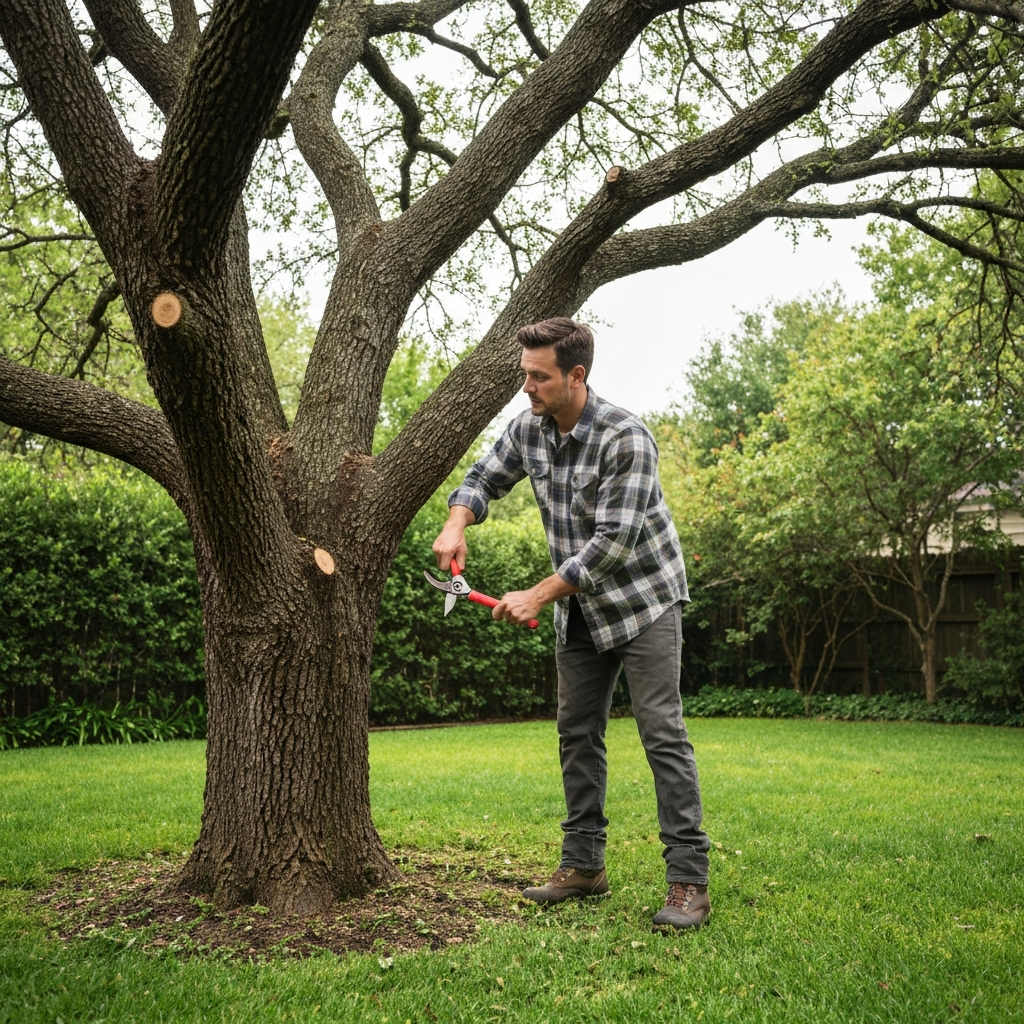
How to Spot a Dangerous Tree Before a Storm
Storms can turn a weakened tree into a serious hazard. Strong winds and heavy rain may cause damaged branches to fall, trunks to split, or entire trees to uproot. Inspecting the trees around your property before severe weather arrives can help protect your home, vehicles, and family.
1. Look for Dead or Hanging Branches Dead branches are among the most obvious warning signs. They may appear dry, bare, cracked, or discolored compared with healthy limbs.
Branches that are already broken or hanging loosely can fall without warning, especially during high winds. Pay close attention to limbs positioned above your roof, driveway, power lines, or outdoor living areas.
2. Check the Trunk for Deep Cracks Small surface marks are not always a concern, but deep cracks or splits may indicate structural weakness. A trunk with a large vertical crack could separate during a storm.
You should also watch for:
* Hollow areas in the trunk * Missing bark * Large cavities * Sections of soft or decaying wood * Multiple trunks beginning to pull apart
These problems may require an evaluation from a qualified tree professional.
3. Watch for Mushrooms Near the Base Mushrooms or fungal growth around the base of a tree may be a sign of internal decay. Although the tree may still look healthy above ground, its roots or lower trunk could be weakening.
Root decay is especially dangerous because it can reduce the tree’s ability to remain stable in wet soil and strong winds.
4. Inspect the Tree’s Lean Some trees grow naturally at an angle. However, a tree that has recently started leaning may be unstable.
Warning signs include exposed roots, cracked soil, or raised ground on one side of the tree. These conditions may suggest that the root system is shifting and the tree could fall during a storm.
5. Examine the Roots Healthy roots help anchor a tree securely. Damaged, cut, rotting, or exposed roots can weaken that support.
Construction, trenching, landscaping, soil erosion, and vehicle traffic may all damage tree roots. After prolonged rainfall, weakened roots may struggle to hold the tree upright.
6. Look for an Uneven Canopy A tree with most of its branches growing on one side may be poorly balanced. Storm winds can place extra pressure on the heavier side, increasing the chance of branch failure or trunk damage.
A sparse canopy, sudden leaf loss, or multiple dead sections may also indicate declining tree health.
7. Check for Previous Storm Damage Older storm damage can create future problems. Look for torn branches, poorly healed wounds, split limbs, or damaged areas where branches were removed.
A partially damaged tree may survive for years but become increasingly unstable as decay spreads through the wood.
What to Do If a Tree Looks Dangerous Do not attempt to climb, cut, or remove a large hazardous branch yourself. Tree work can be dangerous, particularly when damaged limbs or power lines are involved.
Keep people, pets, and vehicles away from the area and contact a qualified arborist or professional tree service for an inspection. Never approach a tree or branch touching a power line. Report it to the local utility company or emergency services.
Schedule an Inspection Before the Storm Dead branches, deep trunk cracks, fungal growth, damaged roots, and sudden leaning can all indicate that a tree is structurally weak. Identifying these warning signs early gives you time to address the problem before severe weather arrives.
A professional tree inspection can help determine whether the tree needs pruning, support, treatment, or removal. Taking action before a storm is safer than dealing with emergency damage afterward.
Need Professional Tree Help?
Our experienced team is ready to assess your trees and provide a safe, straightforward solution.
Call +1 629-284-4946Related Articles
The Best Time of Year to Trim Your Trees in Georgia
Discover the best time to trim trees in Georgia and learn when to prune for healthier growth, improved safety, and better results.
Why Stump Grinding Is Essential After Tree Removal
Learn why stump grinding is important after tree removal and how it helps prevent tripping hazards, pest activity, unwanted sprouts, and landscaping problems.